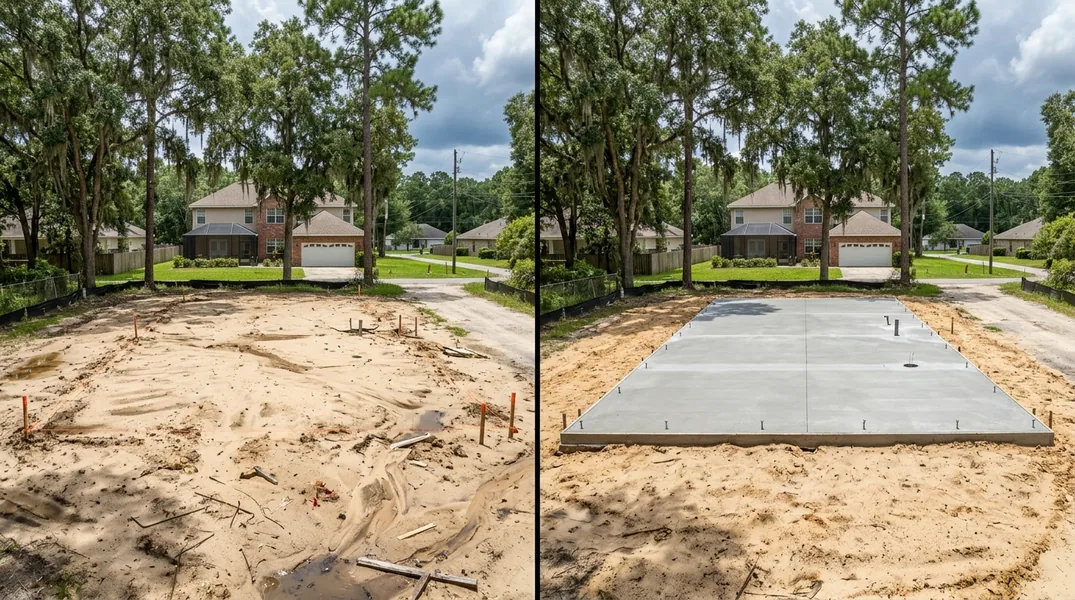
Understanding New Construction Concrete Slabs in Gainesville
Buying a new construction home is exciting, but it also comes with unique responsibilities, especially when it comes to your foundation. Unlike resale homes where you inherit years of history, new construction gives you the rare opportunity to catch potential issues before they become expensive problems. The concrete slab that your home sits on is one of the most critical structural elements, yet many homebuyers overlook it during the final walkthrough.
In Gainesville, our subtropical climate and sandy soil conditions create specific challenges for concrete foundations. The combination of seasonal moisture fluctuations, occasional ground settling, and the region's water table can affect how your slab performs over time. Understanding what to look for during your pre-closing inspection can save you thousands in repairs down the road. A properly installed concrete slab should be level, free of significant cracks, and properly sealed to prevent moisture intrusion.
What to Look for During Your Builder Slab Inspection
Your builder slab inspection is your last chance to document any defects before closing. Start by visually examining the entire surface for cracks, paying special attention to their size, direction, and location. Hairline cracks (less than one-eighth inch wide) are common and generally not a concern, but wider cracks or those that appear to be growing warrant further investigation. Look for cracks that run diagonally across the slab, as these can indicate structural movement or settling issues that may require professional assessment.
Beyond cracks, check for signs of water damage or staining, which suggest moisture is already penetrating the slab. Walk the perimeter of your home and look for gaps between the slab and the foundation wall, as these can become entry points for water and pests. Check whether the slab appears level by looking for areas where water might pool during heavy rains. If you notice any sloping toward the foundation rather than away from it, this is a red flag that drainage may be inadequate. Don't hesitate to hire a professional inspector who specializes in foundation assessment, especially if you notice anything unusual during your walkthrough.
Common Concrete Slab Issues in New Construction Homes
Even with quality builders, new construction concrete slabs can develop problems. One of the most common issues is improper grading around the perimeter, which allows water to pool against the foundation. This is particularly problematic in Gainesville, where heavy afternoon thunderstorms are frequent. Poor drainage can lead to moisture seeping into your crawl space or basement, causing mold growth and structural damage that becomes increasingly expensive to fix as time goes on.
Another frequent problem is inadequate or improper sealing of the concrete slab. A new slab should be sealed to protect it from water penetration and chemical damage. If your builder hasn't applied a quality sealant, or if the application was rushed or incomplete, your slab becomes vulnerable to deterioration. Additionally, some builders may use concrete mixes that aren't ideal for the local climate or soil conditions, leading to premature cracking or spalling. Cracking can also result from concrete being poured during extreme temperatures or from improper curing procedures. If you suspect your slab has any of these issues, it's worth getting a professional opinion before you sign the final papers.
Questions to Ask Your Builder Before Closing
Don't rely solely on your own inspection, no matter how thorough you think you are. Ask your builder detailed questions about how the slab was prepared and installed. Request documentation about the concrete mix design, the date of installation, and the curing time before construction began. Ask whether the builder used a vapor barrier beneath the slab and what type of grading and drainage system was installed around the perimeter. Understanding these details will help you make an informed decision and establish a paper trail if problems develop later.
Ask your builder about their warranty coverage for the concrete slab and foundation. Most builders offer a one-year structural warranty, but coverage varies widely. Get the warranty terms in writing and clarify what types of cracks or issues are covered versus excluded. Ask whether the builder will provide you with a copy of the soil testing report and the foundation engineer's approval. These documents are valuable references if you ever need to pursue repairs or if you're planning future improvements like Concrete Driveways or Concrete Patios on your property. Finally, ask for the name and contact information of the concrete contractor who poured your slab, in case you need to reach them directly with questions.
When to Call a Professional Foundation Inspector
If you notice anything concerning during your walkthrough, or if you simply want peace of mind, hiring a professional foundation inspector before closing is money well spent. A licensed inspector can use specialized equipment to assess the slab's levelness, identify hidden cracks, and evaluate drainage conditions. They can also perform moisture testing to determine whether water is already penetrating the slab. This professional assessment gives you objective data to negotiate with your builder if repairs are needed, or to make an informed decision about whether to proceed with the purchase.
Professional inspectors can also identify issues that aren't immediately obvious to the untrained eye. They understand how concrete behaves over time and can spot early warning signs of problems that will become serious later. If your inspector finds significant issues, you have leverage to request that the builder make repairs before you close. In some cases, you might negotiate a credit toward future repairs or maintenance. If you're already a homeowner and discover slab problems after closing, Gainesville Concrete Pros specializes in Concrete Repair and Resurfacing solutions. For a free estimate on any foundation concerns, call us at (352) 301-4098.
Protecting Your Investment After Closing
Once you've closed on your new home, your responsibility for maintaining the concrete slab begins. Proper drainage is your first line of defense against long-term problems. Ensure that gutters and downspouts direct water at least four to six feet away from your foundation. Grade the soil around your home so that water naturally slopes away from the foundation. If you notice any settling or new cracks developing in the months after closing, document them with photos and notify your builder immediately, as you may still be within the warranty period.
Regular maintenance also extends your slab's lifespan. Keep the concrete clean and consider having it sealed every two to three years to maintain protection against moisture and chemicals. If you're planning to add outdoor features like driveways or patios, work with experienced professionals who understand local soil and climate conditions. Whether you need Stamped and Decorative Concrete features or practical repairs, having a trusted contractor on hand ensures your entire property stays protected. Gainesville Concrete Pros has served homeowners throughout the area for years. If you have questions about your new slab or need professional guidance, don't hesitate to reach out at (352) 301-4098 for expert advice.
Looking for a professional concrete contractor in Gainesville? Gainesville Concrete Pros responds fast for all your concrete needs.
Get a Free QuoteOur services: Concrete Driveways · Concrete Patios · Stamped & Decorative Concrete