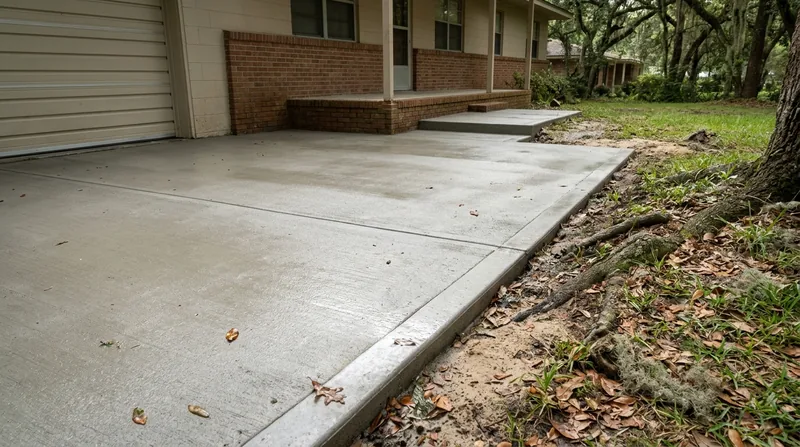




Concrete slabs and foundations in Gainesville demand precision, proper base preparation, and an understanding of north-central Florida's unique soil and climate challenges. Built on sandy soils over karst limestone with clayey Hawthorn layers underneath, Gainesville's residential landscape from the historic Duckpond district to Haile Plantation requires slabs engineered to handle settling fill, sinkhole risk, and the relentless root lift from massive live oaks and laurel oaks that shade every neighborhood. Whether you're adding a garage foundation, shed slab, room addition, or new construction, a properly compacted base and reinforced concrete will keep your structure stable for decades, even as the ground shifts beneath Florida's summer thunderstorms and occasional hurricane-season flooding. Gainesville Concrete Pros has built slabs and foundations across Alachua County that stand firm through seasonal moisture swings, oak-root pressure, and the sandy, unstable fill common in older subdivisions.
Why Concrete Slabs and Foundations Matter in Gainesville's Sandy, Oak-Rooted Terrain
Gainesville sits on some of Florida's most challenging foundation soil. The combination of sandy surface layers, limestone bedrock, and deep root systems from the region's signature oak canopy creates settling, cracking, and edge failure that generic concrete work cannot withstand. A slab poured without proper base compaction, reinforcement, and thickness will crack within a year as roots lift it or fill settles beneath. Your shed, garage, or room addition needs a foundation engineered for Gainesville's specific conditions, not a standard pour.
- We compact the base to eliminate settling and sinkhole risk beneath your slab.
- We install steel reinforcement sized for Gainesville's soil movement and oak-root pressure.
- We pour concrete at engineered thickness, not a thin generic depth that fails under Florida's freeze-thaw cycles in rare hard frosts.
- We grade and slope every slab to shed the heavy afternoon thunderstorm rain common June through September.
- We set edges and perimeter footings deep enough to resist root lift and moisture swings.
A well-built slab in Gainesville stays level, crack-free, and functional for 30 years or more, even as the landscape around it changes.
Key info: Gainesville's Hawthorn Group clay layers and sandy fill make sinkhole subsidence a real risk in older neighborhoods like Florida Park and Kirkwood. A properly engineered slab with deep footings and compacted stone base prevents the sudden edge drop that homeowners discover after heavy rain or a dry spell. Check your local permit requirements at the Alachua County Building Department before starting any foundation work.
How We Build Concrete Slabs and Foundations for Gainesville Homes and Additions
Our process starts with a site inspection to assess soil type, drainage, tree root proximity, and any fill or sinkhole history. We then excavate to stable soil, compact a stone base in lifts, set reinforcement steel, and pour concrete at the thickness and slope your specific job requires. Every slab is finished and cured to resist the mildew, oak-tannin stains, and moisture intrusion common in Gainesville's humid, shade-heavy climate. We also handle all local permitting and setback compliance, so your addition or shed foundation meets Alachua County codes.
- Inspect the site and test soil bearing capacity, noting any prior settling or root intrusion.
- Excavate to stable subgrade and remove any unsuitable fill or debris.
- Compact stone base in 4 to 6 inch lifts using a vibratory plate compactor to 95 percent standard Proctor density.
- Set reinforcement steel (rebar or welded wire mesh) at the engineered spacing and cover depth.
- Pour concrete to the specified thickness, typically 4 to 6 inches for residential slabs and 8 to 12 inches for garage or addition foundations.
- Finish the surface with proper slope for drainage, typically 1/8 inch per foot away from structures.
- Cure the concrete for 7 days minimum before loading, longer in cool or humid conditions.
This methodical approach ensures your slab stays stable and crack-free, even under the weight of a garage, the root pressure of mature oaks, or the settling common in Gainesville's older residential areas.
Example: A homeowner in the Northeast Historic District near downtown Gainesville needed a new garage slab on a lot with three 80-foot live oaks and a history of sinkhole activity. We excavated 18 inches deeper than typical, installed 6 inches of compacted limestone base, poured 6-inch concrete with 1/2-inch rebar, and sloped the surface 1/4 inch per foot toward the front. The slab has remained level and crack-free for five years, even as tree roots continue to press against the perimeter.
Related work often includes garage floors and room-addition foundations that tie into existing structures.
Foundation Methods and Materials for Gainesville Concrete Work
| Approach | Description | Best for |
|---|---|---|
| Standard poured slab with rebar | 4 to 6 inch concrete slab, 1/2-inch or 5/8-inch rebar at 12 to 18 inch spacing, compacted stone base, proper slope for drainage | Most residential sheds, small additions, and light-use foundations in stable soil |
| Thickened-edge slab with deep footings | 6 to 8 inch slab with 12 to 18 inch deep perimeter footings, continuous rebar, limestone base 8 to 12 inches deep, designed for root lift and settling | Garages, room additions, and foundation work near mature trees or in areas with sinkhole history |
| Post-tensioned slab | High-strength cables embedded in concrete under tension to resist cracking from differential settling and root pressure, requires specialized equipment and engineering | Large foundations, addition slabs in problematic soil, or where settlement risk is high |
| Stem wall and grade beam | Concrete wall extending above grade with a reinforced beam footer, typically 12 to 24 inches above finished floor, provides clearance for moisture and root intrusion | New construction, additions requiring elevated floors, or sites with poor drainage and high water table risk |
| Raft or floating slab | Thicker monolithic slab with integrated footings, designed to flex and settle uniformly rather than crack, typically 8 to 12 inches thick | Additions or structures over very poor or variable soil, where conventional footings are not practical |
Each method is chosen based on soil testing, load requirements, tree proximity, and local building codes. We recommend a site visit and engineer's consultation for any foundation larger than a small shed.
Concrete Slabs and Foundations Cost in Gainesville: What to Expect
Pricing for concrete slabs and foundations in Gainesville typically starts at $5 per square foot for a basic 4-inch residential slab on stable, well-prepared soil. A 20-by-24-foot garage foundation (480 square feet) would run roughly $2,400 to $3,200 at that rate, but actual costs rise significantly based on site conditions, depth, reinforcement, and local permitting. Soil testing, deep excavation to avoid sinkhole risk, thickened edges for tree-root pressure, and the cost of compacted stone base all push the final number higher. Getting two or three estimates from insured contractors ensures you understand what each bid includes and why prices differ.
Factors that increase cost include unstable or settling fill that requires removal and replacement, mature tree roots that demand deeper footings and extra reinforcement, sinkhole history that calls for engineered footings and post-tensioning, limited access that requires smaller equipment or hand work, and proximity to utilities that demand careful excavation. Travel within Gainesville and surrounding Alachua County is included in our estimates, so you pay only for the work itself. Visit our pricing page for a detailed breakdown of typical jobs and cost drivers.
The best way to get an accurate price is to request a free estimate by calling (352) 301-4098 or visiting our contact page. We respond within 24 hours and provide a written estimate with no obligation to book.
What to Look for When Hiring a Concrete Contractor Near Gainesville
Choosing the right contractor for your slab or foundation is as important as the concrete itself. Look for a company with current general liability insurance and workers' compensation coverage on every job; ask for a certificate of insurance and verify that coverage is active. Check references from past clients in your neighborhood, especially those with older homes or tree-heavy lots similar to yours. Get multiple estimates so you understand the range of approaches and prices. If your lot has protected trees or is in a historic district like the Duckpond or Northeast Historic District, confirm that the contractor understands local permitting and setback rules. Some HOAs in Haile Plantation or other managed communities require approval before foundation work begins, so verify those requirements upfront.
Ask each contractor to explain their site inspection process, soil testing method, base preparation depth, and reinforcement plan. A contractor who takes time to walk the site, ask about drainage and tree roots, and explain why they recommend a specific thickness or footing depth is more likely to deliver a long-lasting result than one who quotes a price without seeing the ground. Request a timeline and a clear scope of work in writing, including what happens if soil conditions differ from expectations. Contact us at Gainesville Concrete Pros to discuss your project and get a free, no-obligation estimate.
Concrete Slabs & Foundations in Gainesville: Pricing Guide
| Service | Price | Details |
|---|---|---|
| Standard 4-inch residential slab | Starting at $5/sq ft | Compacted stone base, rebar reinforcement, proper slope for drainage on stable soil without tree roots or settling |
| Thickened-edge garage or addition foundation | Starting at $7/sq ft | 6-inch slab with deep perimeter footings, extra rebar, deeper stone base to resist oak-root lift and sinkhole settling common in Gainesville |
| Post-tensioned or engineered slab | Starting at $10/sq ft | High-strength cable reinforcement, specialized design for problematic soil or high settlement risk, requires engineer consultation and specialized placement |
| Site prep, soil testing, and deep excavation | On estimate | Varies by depth required, fill removal, and sinkhole or settling history; site visit required to quote accurately |
| Travel within Gainesville and Alachua County | Included | No separate mileage or call-out fee for service areas; all travel costs rolled into the estimate |
| Free estimate and site inspection | Free | Response within 24 hours at (352) 301-4098, written quote, no obligation to book; includes soil and site assessment |
Indicative pricing, the exact cost depends on square footage, finish, and site access. Free personalized estimate within 24h at (352) 301-4098.


