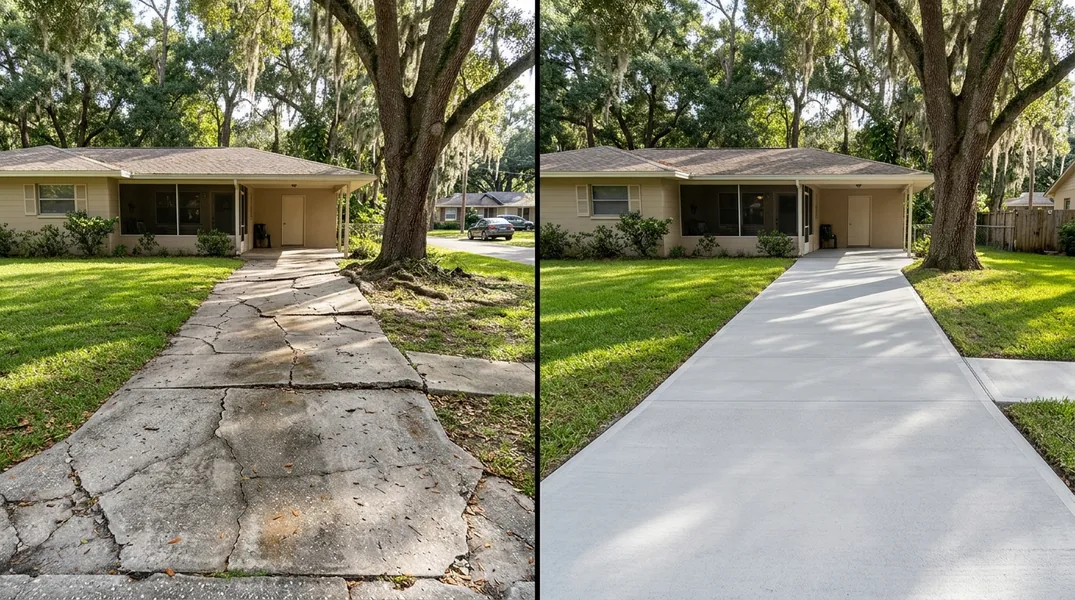
Why Timing Matters: Understanding Concrete Pouring Season in Gainesville
If you're planning a Concrete Driveways project in Gainesville, you might think you can pour concrete anytime during the year. The reality is more nuanced. Concrete curing is a chemical process that's highly sensitive to temperature, humidity, and moisture. Pour at the wrong time, and you risk a finished product that cracks, weakens prematurely, or fails to reach its full strength potential. Understanding when to pour concrete Florida-wide, and specifically in Gainesville, can mean the difference between a durable surface that lasts decades and one that requires costly Concrete Repair & Resurfacing within a few years.
The concrete pouring season in Gainesville is influenced by our subtropical climate. Unlike northern states where winter freezing is the primary concern, our challenges revolve around heat, humidity, and intense rainfall. These factors don't just affect how quickly concrete sets; they can fundamentally compromise the structural integrity of your project if not managed carefully. That's why working with an experienced Gainesville concrete contractor who understands local conditions is essential for success.
Spring: The Ideal Window for Concrete Work
Spring, roughly from late February through May, represents the sweet spot for pouring concrete in Gainesville. During this period, daytime temperatures typically range from 70 to 85 degrees Fahrenheit, which is ideal for concrete curing. The concrete won't cure too quickly (which can trap moisture and cause surface cracks) nor too slowly (which delays your project timeline). Spring also tends to offer more predictable weather patterns compared to summer and fall, reducing the risk of unexpected downpours that could damage freshly poured concrete before it sets.
Another advantage of spring pouring is that humidity levels, while present, are generally more moderate than they'll be later in the year. Concrete curing heat and rain work against each other in Florida. Too much heat accelerates surface curing while the interior remains soft, creating internal stress. Spring's gentler conditions allow for more uniform curing throughout the concrete mass. If you're planning Concrete Patios or other decorative work, spring also gives you the best aesthetic results since the concrete can cure at a controlled pace, reducing the likelihood of discoloration or surface imperfections. For homeowners considering a project, spring is when you should reach out to your local contractor for scheduling and a free estimate.
Summer Challenges: Heat, Humidity, and Timing Concerns
Summer in Gainesville, from June through September, brings intense heat and high humidity that can complicate concrete pouring. Daytime temperatures regularly exceed 90 degrees, sometimes climbing into the mid-90s. When concrete is exposed to this level of heat during the curing phase, the surface can dry too quickly while the interior remains wet. This creates internal stress and often results in cracking. Additionally, the rapid surface evaporation can trap moisture beneath the surface, weakening the concrete's bond and reducing its long-term durability.
Summer also brings the risk of afternoon thunderstorms, which are almost daily occurrences in July and August. If rain falls on freshly poured concrete before it has cured sufficiently, it can wash away the cement paste, compromise the surface finish, and create weak spots in the structure. For projects like Stamped & Decorative Concrete, summer conditions are particularly problematic because the aesthetic details require precise timing and controlled conditions to look their best. If summer is your only option, work with a professional contractor who can implement cooling strategies, use concrete additives to slow the curing process, and have contingency plans for weather interruptions. The added cost of these protective measures often makes spring or fall a more economical choice.
Fall: A Secondary Window with Some Cautions
Fall, from October through early November, can be another viable window for pouring concrete in Gainesville, though it comes with some caveats. As temperatures begin to drop from summer extremes into the 75 to 85 degree range, conditions become more favorable for curing. The humidity remains relatively high due to residual moisture from the rainy season, but temperatures are no longer extreme enough to cause rapid surface evaporation. This makes fall a reasonable alternative to spring if your project timeline didn't allow for a spring pour.
However, fall in Gainesville also coincides with hurricane season (which peaks in September and October) and the tail end of the rainy season. While the daily afternoon thunderstorms of mid-summer have typically subsided by late October, the risk of severe weather events remains elevated. Before scheduling a fall concrete project, check the long-range forecast and be prepared for potential weather delays. Additionally, as fall progresses into November, nighttime temperatures can drop significantly, which slows the curing process. Slower curing isn't necessarily bad, but it does extend the timeline before your concrete reaches full strength. If you're considering a fall project, consult with Gainesville Concrete Pros at (352) 301-4098 to discuss your specific timeline and weather considerations.
Winter: Avoid This Season for Concrete Projects
Winter in Gainesville is generally mild compared to northern states, but it's still not ideal for concrete pouring. From December through January, nighttime temperatures can dip into the 40s and occasionally into the 30s. While we rarely experience freezing temperatures, even cool weather slows the concrete curing process significantly. When concrete cures too slowly, it extends the time before the surface is ready for use, and it can affect the final strength and durability of the material. Additionally, winter brings increased rainfall in Gainesville, with December and January being among our wetter months. This combination of cool temperatures and moisture creates conditions where concrete takes much longer to cure and where the risk of water damage is higher.
There's also a practical consideration: winter is when many homeowners and contractors in Gainesville are less active with outdoor projects. If you do pour concrete in winter, you may face longer wait times to schedule work and potentially higher rates due to lower demand for contractors. Unless there's an urgent need, it's best to wait for spring or fall conditions. Winter is the ideal time to plan your project, get quotes, and prepare materials so you're ready to move forward when conditions improve.
Concrete Curing Heat and Rain: Managing the Florida Environment
Understanding how concrete curing heat and rain interact is critical for success in Gainesville. Concrete doesn't simply 'dry' like paint; it undergoes a chemical reaction called hydration that requires moisture to proceed. However, too much moisture (from rain or high humidity) or too much heat (from direct sun and high temperatures) can both interfere with this process. The ideal scenario is moderate temperature, moderate humidity, and protection from direct rain during the first 24 to 48 hours after pouring. During this critical window, the concrete is setting and is most vulnerable to damage.
Professional contractors in Gainesville use several strategies to manage these environmental factors. These include using concrete admixtures (chemical additives) that adjust the curing rate, applying curing compounds or plastic sheeting to control moisture loss, and scheduling pours during times when weather forecasts show stable conditions. For Concrete Driveways and other large projects, some contractors use temporary shade structures or misting systems to prevent rapid surface drying. The choice of strategy depends on the season, the specific project type, and local weather conditions. This is another reason why hiring an experienced local contractor is invaluable; they know how to adapt their methods to Gainesville's unique climate.
Planning Your Project: Getting a Free Estimate and Timeline
If you're ready to move forward with a concrete project in Gainesville, the first step is to contact a qualified contractor who can assess your specific needs and recommend the best timing. Gainesville Concrete Pros specializes in serving homeowners throughout the area with expertise in all types of concrete work, from driveways to patios to decorative installations. We understand the local climate, the seasonal challenges, and the best practices for ensuring your project succeeds.
When you reach out for a free estimate, be prepared to discuss your project timeline, location, and any specific concerns you have about weather or scheduling. Our team can provide realistic timelines based on current conditions and recommend the optimal season for your work. Whether you're planning a simple driveway, a decorative patio, or a more complex installation, we'll help you understand the factors that affect your project and the pricing involved. Call Gainesville Concrete Pros today at (352) 301-4098 to discuss your project and get started on the path to a beautiful, durable concrete surface that will serve your home for years to come.
Looking for a professional concrete contractor in Gainesville? Gainesville Concrete Pros responds fast for all your concrete needs.
Get a Free QuoteOur services: Concrete Driveways · Concrete Patios · Stamped & Decorative Concrete